What the Iran Conflict Means for Your Portfolio
Wars Come and Go. Markets Keep Climbing.
The escalating conflict with Iran has dominated headlines, and many of our clients have reached out asking the same question: should I change my portfolio?
The short answer is no.
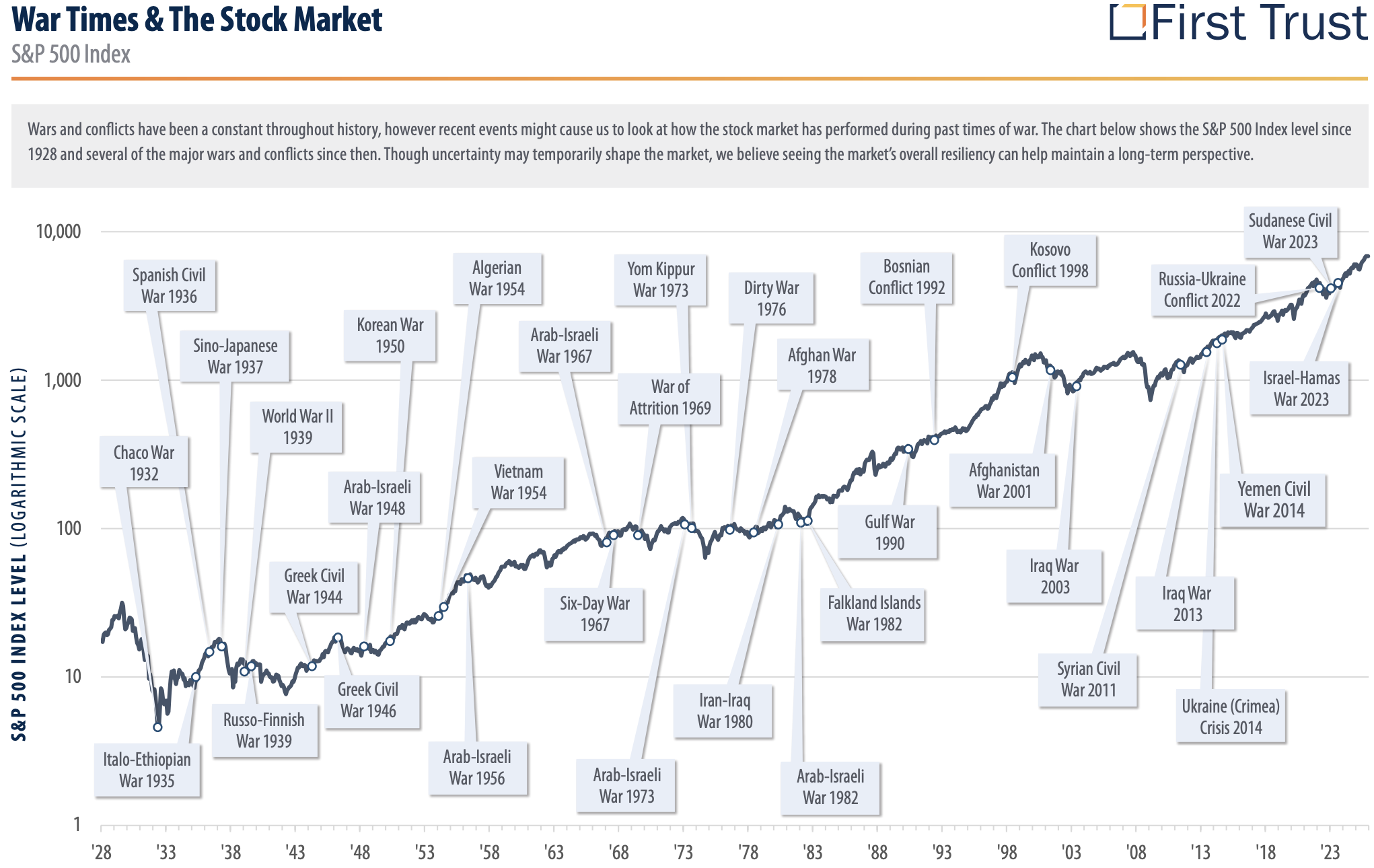
The chart above plots the S&P 500 on a logarithmic scale from 1928 through 2023, annotated with every major war and conflict along the way. World War II, Korea, Vietnam, the Gulf War, Afghanistan, Iraq, and the recent conflicts in Ukraine and Israel. Through all of them, the long term trajectory of the market has been overwhelmingly upward.
Short Term Volatility Is Normal
Geopolitical shocks often trigger sharp, short term selloffs. The Gulf War saw a roughly 20% drawdown before recovering within months. The early days of the Afghanistan and Iraq wars produced similar knee jerk reactions. But in nearly every historical case, patient investors who stayed the course recovered their losses and then some.
What You Should Actually Do
- Resist the urge to sell. Locking in losses during a panic is the single most destructive decision an investor can make.
- Review your allocation, not your headlines. If your portfolio was properly diversified before the conflict, it still is.
- Consider rebalancing into weakness. Market dips driven by fear rather than fundamentals can be opportunities to buy quality assets at a discount.
The pattern across nearly a century of data is clear: uncertainty is temporary, but market growth is persistent. Stay disciplined, stay diversified, and let history work in your favor.
Stay informed
Get our latest insights on tax strategy, markets, and wealth planning delivered to your inbox.